

The Ultimate Guide to Flossing in 2025: What Actually Works
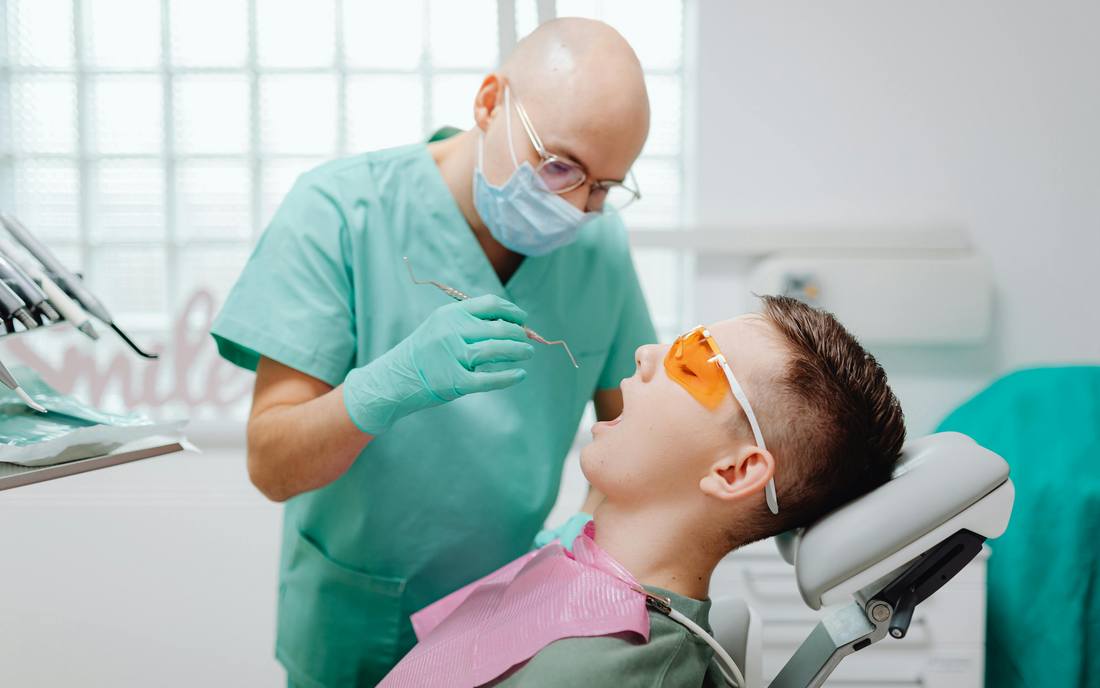
Here's the truth: everyone knows they should floss. Almost nobody does it. Let's figure out why—and what actually works.
Let's Be Honest About Flossing
You've been to the dentist.
You know the conversation.
"Do you floss?"
"...Yeah, sometimes."
(Translation: I did it twice last month and felt guilty about lying.)
Here's the thing: you're not alone. Only about 3 out of 10 people actually floss every day. And that's including the people who lied on the survey.
This isn't about being lazy or undisciplined. Most people genuinely want healthy teeth and gums.
The problem isn't you. It's the tools.
Traditional flossing—the string-around-your-fingers method—was invented in 1815. That's over 200 years ago. We've invented smartphones, electric cars, and dishwashers since then, but we're still wrapping string around our fingers like it's the 1800s.
This guide breaks down what actually works in 2025: the different types of flossing tools, why they work (or don't), and how to find the one you'll actually use every day.
Because the best flossing method isn't the "perfect" one. It's the one you don't skip.
Why Flossing Actually Matters (It's Not Just About Cavities)
The Part Your Toothbrush Can't Reach
Your toothbrush is great at cleaning the front, back, and chewing surfaces of your teeth.
But between your teeth? Where they touch? Your toothbrush can't get in there.
And that's actually about 40% of your tooth surface. So if you only brush and never floss, you're basically leaving almost half your teeth dirty every single day.
What Happens When You Skip Flossing
In the first 24 hours:
- Food particles get stuck between teeth
- Bacteria start forming a sticky film (called plaque)
- Your gums might feel slightly tender
After a few days:
- Plaque hardens into tartar (that rough, yellowish stuff)
- Your gums get inflamed and swollen
- You might notice bad breath
After weeks or months:
- Cavities form between your teeth (where you can't see them)
- Gums start bleeding when you brush
- Gum disease can develop (this is the leading cause of tooth loss in adults)
After years:
- Cavities get bigger and need expensive fillings or crowns
- Gum disease can lead to tooth loss
- Some research even links gum disease to heart problems and other health issues
The Good News
All of this is preventable with just 60-90 seconds of flossing per day.
Think of it like this: brushing your teeth without flossing is like washing your hands but never between your fingers. You're getting most of it, but missing the spots where problems actually start.
The Main Ways to Floss (And How They Actually Work)
1. Traditional String Floss
What it is: The classic roll of waxed or unwaxed thread you wrap around your fingers.
How it works:
- You tear off about 18 inches
- Wrap it around your middle fingers
- Use your thumbs and index fingers to guide it between teeth
- Curve it into a "C" shape around each tooth
- Slide it gently below the gum line
- Repeat for every single gap between your teeth
The good:
- Super cheap (like $5-8 for a roll that lasts months)
- Thin enough to fit through tight spaces
- This is what dentists have recommended for decades
The not-so-good:
- Takes 2-3 minutes to do properly
- Your fingers end up in your mouth
- It's awkward and uncomfortable
- Can hurt or bleed if you have tight teeth
- Easy to skip because it feels like a chore
- You need good hand coordination
Real talk: String floss works great... if you actually use it correctly every day. But most people don't. It's too fiddly, takes too long, and honestly just feels gross to some people.
Best for: People who already have a solid flossing habit and don't mind the technique.
2. Floss Picks
What they are: Little plastic handles with a short piece of floss stretched across the top.
How they work:
- You hold the handle
- Guide the floss part between your teeth
- Move it back and forth
- Throw it away when done
The good:
- Super easy—just one hand needed
- No finger-wrapping required
- Great for keeping in your car or desk drawer
- Kids and teens usually find these way easier
The not-so-good:
- The floss can't curve around your teeth properly (it's too short and tight)
- You're using the same piece of floss for your whole mouth
- Creates a lot of plastic waste
- Doesn't clean below the gum line very well
Real talk: Floss picks are better than nothing, but they're kind of the "fast food" of flossing. Quick and easy, but not the healthiest option.
Best for: People who need a portable backup or have severe hand dexterity issues.
3. Water Flossers (Like Waterpik)
What they are: Electric devices that shoot a stream of pulsating water between your teeth.
How they work:
- Fill the tank with water
- Point the tip at your gum line
- Turn it on and let the water spray between teeth
- Move along all your teeth
The good:
- Really effective for braces, bridges, and implants
- Easier than string floss for most people
- Can feel refreshing
- Great if you have limited hand mobility
- The ADA (American Dental Association) approves certain models
The not-so-good:
- Messy—water goes everywhere (you basically have to lean over the sink)
- Takes up counter space
- Kind of loud
- Costs $90-250 to buy
- Not great for travel
- Doesn't "scrape" plaque off as well as actual floss in really tight spots
Real talk: Water flossers are awesome for specific situations (especially braces). But the mess and bulk make some people quit using them.
Best for: People with braces, implants, or bridges. Also good if you absolutely refuse to use string floss.
4. Interdental Brushes (Tiny Brushes)
What they are: Little cone-shaped brushes on a handle—like tiny bottle brushes.
How they work:
- Choose the right size for your gaps
- Insert gently between teeth
- Move back and forth a few times
- Rinse and reuse for about a week
The good:
- Studies show they work really well for bigger gaps
- Easy to use—just in and out
- Reusable (each brush lasts about a week)
- Great if you have gum recession or wider spaces
The not-so-good:
- Won't fit between tight teeth (this is the big one)
- You might need different sizes for different parts of your mouth
- Can be too thick for front teeth
Real talk: If they fit, they're great. But most people have at least some teeth that are too close together for these brushes.
Best for: People with wider gaps between teeth, or those with gum disease who need extra cleaning.
5. Electric Flossers (Like Glissi)
What they are: Handheld rechargeable devices with thin floss on a vibrating head.
How they work:
- Charge the device (like an electric toothbrush)
- Snap on a floss head
- Turn it on—the floss vibrates really fast
- Guide it between your teeth (the vibration helps it glide through)
- Takes about 60 seconds for your whole mouth
The good:
- Super fast—60-90 seconds total
- Vibration helps the floss slide through tight spots without pain
- One-handed and easy to use
- Gentle on dental work (veneers, crowns, etc.)
- No water mess
- Looks nice on your counter (so you actually remember to use it)
- Satisfying to use (you can feel it working)
The not-so-good:
- Costs more upfront ($129 for Glissi)
- Needs replacement heads (about $35 for a pack)
- Needs charging (though battery lasts weeks)
- Still requires some technique
Real talk: Electric flossers are designed to solve the biggest problem with flossing: people don't do it because it's annoying. These make it fast, easy, and kind of satisfying.
Best for: People who never successfully built a flossing habit, those with tight or painful teeth, busy people, anyone with cosmetic dental work, or people who want the easiest option.
Side-by-Side Comparison: Which One Is Right for You?
| If you... | Try this: | Why: |
|---|---|---|
| Have tight teeth that hurt with regular floss | Electric flosser or waxed string floss | The vibration or wax helps it slide through easier |
| Have braces or permanent retainers | Water flosser | Gets around the hardware better than anything else |
| Have veneers, crowns, or expensive dental work | Electric flosser (like Glissi) | Gentle and controlled—less risk of damage |
| Never successfully made flossing a habit | Electric flosser | Fastest and easiest—removes all the excuses |
| Already floss every day with string | String floss | If it's working, keep going! |
| Are on a tight budget | String floss | Costs like $8 a year |
| Travel all the time | Electric flosser or floss picks | Compact and no water needed |
| Have wide gaps or gum recession | Interdental brushes | They work best for bigger spaces |
How to Actually Build a Flossing Habit That Sticks
Why "Just Do It" Doesn't Work
Most people try to start flossing by telling themselves: "Okay, starting tomorrow I'm going to floss every single night."
Then they skip day 3. Then day 5. Then they give up.
This isn't a discipline problem. It's a design problem.
Habits stick when they're:
- Easy to start
- Quick to finish
- Satisfying to complete
Traditional string floss fails all three for most people.
The 30-Day Strategy
Week 1-2: Expect It to Suck
- Your gums will probably bleed a little (this is normal and stops after about 10 days)
- It'll feel awkward
- You'll "forget" sometimes
- This is fine. Everyone goes through this.
Week 3: It Gets Easier
- Bleeding mostly stops
- You get faster at the technique
- It starts feeling automatic
Week 4: You've Got a Habit
- Your teeth feel weird if you don't floss
- It takes barely any thought
- You're officially in the 30% who floss daily
Make It Stupidly Easy
Put your flossing tool where you can see it.
- Right next to your toothbrush
- On the bathroom counter (not in a drawer)
If you use an electric flosser, the charging base sitting on your counter becomes a visual reminder.
Attach it to something you already do:
- Right after brushing your teeth
- Before you wash your face
- After you take off your makeup
Track it somehow:
- Mark your calendar
- Use a habit tracking app
- Tell a friend or roommate to ask you about it
Start Small If You Need To
If every tooth feels overwhelming:
- Week 1: Just floss your front teeth
- Week 2: Add your back teeth
- Week 3: Add the other side
- Week 4: Full mouth every day
Building a small habit and expanding it works better than trying to be perfect and giving up.
The Money Truth: What Flossing Actually Costs
The Tools
- String floss: About $5-8 per year
- Floss picks: About $50-80 per year (if using one daily)
- Water flosser: $150-250 upfront, then about $20-40/year for replacement tips
- Electric flosser: $129 upfront, then about $70-140/year for replacement heads
- Interdental brushes: About $100-150 per year
The Dental Bills You Avoid
Here's where it gets interesting.
If you DON'T floss:
- Cavity filling: $150-250 each
- Crown (when the cavity gets bad): $1,500-2,500
- Root canal + crown: $2,000-4,000
- Gum disease deep cleaning: $800-1,600
- Dental implant (if you lose a tooth): $4,000-6,000
Average person who doesn't floss: Will get 2-3 cavities between teeth over their lifetime = at least $500-1,500 in dental work.
The Real Math
Even if you spend $200/year on an electric flosser, preventing just ONE crown ($2,000) pays for 10 years of flossing.
Plus you avoid:
- Pain and discomfort
- Time off work for dental appointments
- The guilt every time you see your dentist
Flossing is the cheapest dental insurance you can buy.
Common Questions (Answered Honestly)
"Does it really matter which type I use?"
Short answer: The best type is the one you'll actually use 6-7 days a week.
A "less perfect" method you do daily beats a "perfect" method you skip constantly.
"My gums bleed when I floss. Should I stop?"
No—bleeding means you NEED to floss more, not less.
When you skip flossing, your gums get inflamed. When you start again, they bleed easily because they're irritated.
If you floss gently every day for 10-14 days, the bleeding almost always stops.
If it doesn't, or if it's really heavy bleeding, see your dentist.
"Can I just use mouthwash instead?"
Nope.
Mouthwash kills some bacteria and freshens breath, but it doesn't physically remove plaque.
Think of it like this: if you had mud on your hands, would rinsing them in water get them clean? No—you need to actually scrub.
Same with your teeth. Mouthwash can't scrub plaque off. Only physical contact (floss, brush, or interdental brushes) can do that.
"How often do I really need to floss?"
Ideally: Once a day, every day.
Plaque starts forming within hours of eating and hardens into tartar within 24-72 hours. Once it's tartar, you can't remove it at home—only a dentist can.
Daily flossing keeps plaque soft and removable.
Bare minimum: 4-5 times per week is way better than nothing.
"What if I have braces?"
Use a water flosser or special orthodontic flossers.
Regular floss is really hard to use with braces. Water flossers are perfect for this because the water stream can get around brackets and wires.
There are also threader flossers designed for braces, but water flossers are way easier.
What Dentists Actually Recommend (And Why)
Most dentists will tell you: "Use whatever method you'll actually use consistently."
Dentists see the pattern all the time:
- Patients say they'll start using string floss
- They don't
- They come back 6 months later with more cavities and gum inflammation
Smart dentists focus on compliance, not theoretical perfection.
If you tell your dentist "I tried string floss for years and never stuck with it, so I got an electric flosser and now I do it every day," they'll probably be thrilled.
Consistent mediocre flossing beats perfect occasional flossing every single time.
The Bottom Line: Just Pick One and Start
Here's the thing about flossing: there's no "perfect" method that works for everyone.
There's only:
- The method that works for you
- The method you'll actually do
- The method that fits your life
If you're still not flossing regularly, try this:
Step 1: Pick the method that sounds easiest to you Step 2: Buy it this week Step 3: Put it somewhere visible Step 4: Commit to 30 days Step 5: If it's not working after 30 days, try a different method
The Real Choice
You have two options:
Option 1: Keep not flossing, feel guilty at every dental appointment, and eventually pay for cavities and gum treatments
Option 2: Spend 60-90 seconds a day with a tool that makes it easy, and avoid all of that
Your teeth are building up plaque right now. Not next week. Not next month. Right now.
The best time to start flossing was 10 years ago.
The second best time is tonight.
Ready to Actually Do This?
If you've tried string floss and kept quitting, you're not undisciplined—you just had the wrong tool.
Check out Glissi—the electric flosser designed specifically for people who never successfully made flossing a habit. 60 seconds, one hand, no pain in tight teeth, and a 30-day trial to see if it actually works for your real life.
Because the best flossing method is the one you don't skip.
Fresh Talk is where we talk about oral health like normal humans—no guilt, no judgment, just helpful info about what actually works.

